Showing posts with label Vatican Radio. Show all posts

Thursday, February 16, 2012

Reach Out And Touch Faith

By Liz Hartnett

 As Americans, we become familiar with any and every right that becomes exposed to ridicule -- the right to bear arms, the right to print, the right to vote. But one right that we often dismiss and interpret to our own discretion is probably the most important one; the right to practice our religion.
When it comes to practicing faith, Americans become very sensitive. To make a blatant generalization, it’s “alright” to have the freedom of religion when it comes to more conventional and familiar faiths, but when something new and foreign pops up, our most cherished and fundamental right becomes scrutinized.

With saying that, American journalism attempts to not reflect the biases of the mass. After all, as the bearers of light, we need to know better than those who were not blessed by the patron saint Walter Williams. But when religion and journalism mix, it can get heady.

As American culture becomes more and more secularized, you would think that faith-based journalism would lose its place to Justin Bieber and the other troubles of the world today. We face insurmountable debt, wars, disease, and a national election that might as well tear the country apart.  We have become a people of material possessions -- of iPhones, of Ugg boots, of fast cars. To say it plainly, religion has been replaced by something other in our lives.

At least, that’s what it looks like.

Religion journalism is thriving and well in America. The Revealer, a blog dedicated to discussing religion in the media, has been thriving since 2003. Religionwriters.com calls religious journalism the “most fascinating beat in journalism.” The website also has a long list of blogs dedicated solely to reporting on faith, as well as some guidelines with those who want to get started in the beat. And of course, there are news agencies throughout the world, committed to reporting on the different interpretations of God.
In Europe, though, religious journalism takes a different meaning.

Monday, February 13, 2012

A European Atmosphere

By Emily Brown

After three years of taking classes in the journalism school at the University of Missouri I can tell you one thing I have learned for certain: J-schoolers are a proud and close-knit clan.  We walk in packs to the J-CafĂ© for coffee, proudly display Missouri School of Journalism apparel, and can frequently be heard boasting of going to the best school around.  Many critique these behaviors, but I ask why shouldn’t we be like this?  The journalism school at Mizzou, often revered as one of the best in the nation, provides us with a phenomenal education, no matter your emphasis, and offers fantastic opportunities that other majors can only dream of.

One such opportunity is the Europe Tour study abroad program.  Students from each journalistic sequence get to experience the sights and wonders of Europe while getting a taste of daily life and work abroad in their emphasis.  Various visits to media outlets and agencies allow students to not just feel pride in their own major, but also to appreciate all the other sequences that their journalistic comrades are involved in as well.  As a strategic communication major, I was much more enthusiastic about tours and lectures from advertising agencies like McCann-Erickson and public relations firms like Hill+Knowlton, however, upon entering various news outlets and getting the chance to be a fly on the wall for a couple hours gave me more appreciation for my fellow journalists in their respective emphasis areas.

Each agency or news organization was unique with its own characteristics and mannerisms, however, after visiting a handful of places I began to notice a pattern.  Each sequence of work has similarities in the type of people that work there, the speed of duties carried out, and the overall atmosphere.

Wednesday, February 8, 2012

The Importance of Languages

By Sydney Berry 


If there was one theme that repeated out throughout our entire trip through Europe, it was the huge role language plays in each region, be it political, social, religious or within the media. Each city we visited has a certain representation that I took from it, and I’m going to explore the role language played in each. In Prague, it was social.  In Paris, it was the media.  In Brussels, it was political, and in Rome, religious.

Monday, January 30, 2012

The Language Barrier

By Kayla Meyers

Hello! Ahoj! Bonjour! Hallo! Ciao!

English, Czech, French, Dutch and Italian. These five are just a taste of the languages that we encountered on our trip to Europe. While I had visited Paris before our trip, I was unsure what to expect in the other three cities, as I had never communicated with people who speak languages other than English, Spanish and French. Personally, I can't speak any language other than English, so I relied on Google Translate to learn key phrases that would help me get by at restaurants and shops, but this barely scratched the surface. After visiting each of the four cities, I realized that each has a very distinct culture that communicates not only verbally, but non-verbally as well.

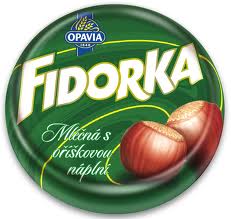
Delicious treat from Prague.
On our first day in Prague, I started to pick up on some of the Czech body language and communication styles. It seemed as if the locals in Prague were a bit cold to our loud American ways. I felt as if not many of the people that we met knew how to speak English, or at least, very little. However, at McCann-Erickson (an advertising agency), I noticed that some of the commercials we saw had English-speaking characters with Czech captions. This is something I don't commonly see in America - the advertisements are usually always English-speaking characters. The advertisements shown were also able to connect with people other than purely Czech audiences. For example, the Fidorka commercial shown influenced quite a few of us on the trip to visit the supermarket and purchase the delicious chocolate treats. On our free day in Prague, we were able to see more of the culture and experience more of the locals and how they communicate. I still felt a sense of coldness at times, especially when people realized that we were Americans and couldn't speak a bit of Czech, except for the simple "hello", "goodbye", and "thank you" that we had learned from Google Translate.