Showing posts with label Rome. Show all posts

Wednesday, February 15, 2012

The Significance of Culture in Advertising

By Katherine Weider

The introduction of the iPod more than a decade ago led the Vatican to ask two questions – Is it good? And is it useful? Church officials weren't concerned with how much it cost, or where they could get it.  They simply wanted to know whether or not it would be of use in everyday life.  

Turns out, these two questions apply to the advertising world as well, and are considered when it comes to the strategic planning of an ad campaign.  The success of an ad depends on how well a message is presented to an audience; it must make people feel a need for the product or service being sold.  In order to create a good and useful ad, one must first have a full understanding of their audience’s culture and historical background. It is only from there, after considering a country’s cultural norms, that an advertiser can create an ad that is relevant to their audiences’ way of life.

Thursday, February 9, 2012

Following Journalism Religiously

By Victoria Guida

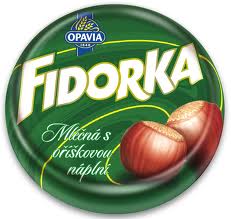
Our two-week trip was a whirlwind of beautiful buildings, fun outings and media visits. Translation: an amazing experience for a journalism nerd who loves to travel. I learned some new words — “pain” means bread in French and doesn’t sound at all like our less pleasant word of the same spelling. I ate some new food — like goulash, Fidorka (look it up on Wikipedia) and those tasty, actually Belgian, waffles. But I also got to experience firsthand how Europeans cover the news.
St. Peter's Basilica.

During our visit to the school of communications at the Pontifical University of the Holy Cross in Rome, I was intrigued by David Kerr’s take on coverage of the Vatican. Kerr, a friendly Scottish man who reports for Catholic News Agency, said that while Vatican correspondents shouldn’t just produce propaganda for the Catholic Church, other news outlets often present the Church unfair.

This is interesting to me because the Church is an entity based around a religion with which people either agree or disagree based on deeply held beliefs. The Church’s positions on any topic would be expected to come back to, “It’s what Jesus would want,” and that’s something that’s based more on faith than on reasoning. But it’s not like the Church doesn’t use reasoning, and maybe that’s something that is often overlooked. For example, the Church doesn’t continue to condemn the use of contraception because it has ignored the benefits of using it, but because it decided a long time ago that humans should not interfere with the natural process of producing children; a position that still holds no matter the perceived benefits of contraception.

It’s moral decisions like this that could make covering the Church more complicated in a modern world. Is it okay for the secular world to condemn the Church for a position it sees as harmful to the future of the world? I suppose the answer should be: as long as the Church’s position is properly explained. Kerr seems to believe that too often this does not happen, and I decided to see whether he’s right.

Monday, February 6, 2012

One World

By Ashten Travis

Flying across the Atlantic, halfway around the world I had no idea what to expect. This was my first adventure in Europe and I was curious to see how the world exactly worked in another country. Although I experienced millions of changes and culture shocks, one thing was universal, the love for our planet.

Friday, February 3, 2012

Culture: A Small Word Makes a World of Difference

By Kaitlan Whitteberry 

Granola clinked into the porcelain bowl, piling itself into a small, staggered triangle. I splashed milk onto my cereal and took a seat for breakfast. The other 22 students on my study abroad slowly trickled into the room, a few frowning faces mirrored those still jet-lagged from our travels the day before. However, everyone seemed slightly giddy, as it was our first day in Prague! I smiled and took a bite of my granola thinking of the days ahead. But my thoughts were interrupted, and before I knew I was having a cultural experience.

Monday, January 30, 2012

The Language Barrier

By Kayla Meyers

Hello! Ahoj! Bonjour! Hallo! Ciao!

English, Czech, French, Dutch and Italian. These five are just a taste of the languages that we encountered on our trip to Europe. While I had visited Paris before our trip, I was unsure what to expect in the other three cities, as I had never communicated with people who speak languages other than English, Spanish and French. Personally, I can't speak any language other than English, so I relied on Google Translate to learn key phrases that would help me get by at restaurants and shops, but this barely scratched the surface. After visiting each of the four cities, I realized that each has a very distinct culture that communicates not only verbally, but non-verbally as well.

Delicious treat from Prague.
On our first day in Prague, I started to pick up on some of the Czech body language and communication styles. It seemed as if the locals in Prague were a bit cold to our loud American ways. I felt as if not many of the people that we met knew how to speak English, or at least, very little. However, at McCann-Erickson (an advertising agency), I noticed that some of the commercials we saw had English-speaking characters with Czech captions. This is something I don't commonly see in America - the advertisements are usually always English-speaking characters. The advertisements shown were also able to connect with people other than purely Czech audiences. For example, the Fidorka commercial shown influenced quite a few of us on the trip to visit the supermarket and purchase the delicious chocolate treats. On our free day in Prague, we were able to see more of the culture and experience more of the locals and how they communicate. I still felt a sense of coldness at times, especially when people realized that we were Americans and couldn't speak a bit of Czech, except for the simple "hello", "goodbye", and "thank you" that we had learned from Google Translate.

Friday, January 27, 2012

Czech the Difference

By Ilyse Cohen 


After getting back from our two-week journalism study abroad program to Prague, Paris, Brussels and Rome, I have learned so much about how different countries handle different aspects of the media. One of the differences I found most interesting was how the Czech Republic advertisements were targeted and regulated. In Prague, we visited McCann-Erickson, a worldwide advertising agency network with eight different media companies all geared toward helping their clients and growing their business.

Monday, January 23, 2012

You Don't Say...Censorship in the European Media


By Tayler Overschmidt

Our recent two-week adventure through Europe was an eye opening experience regarding European media practices and styles. As we toured Prague, Paris, Brussels and Rome, we also toured new perspectives regarding journalism ethics.

Prague's Astronomical Clock. (Tayler Overschmidt)
In Prague, we visited McCann-Erickson, where we saw some examples of some famous—or infamous—advertising campaigns in the Czech Republic. A representative from the company presented information for us regarding some of the most well known advertising campaigns in the country and other information on the “Czechness.”

During the presentation, I asked what campaign from McCann-Erickson made the representative the most proud. His answer was a commercial for a dessert called Fidorkas. In this commercial, a little girl hits a car with her doll and makes the airbags inflate. Then she steals the dessert right out of the car passenger’s hand. The thing is, this commercial had a very short time on the air because it was banned.

Tuesday, December 13, 2011

Vítejte! Bienvenue! Welkom! Benvenuto!

By Amy Simons and Kevin Wise
Professors, Missouri School of Journalism


Let us be the first to welcome you to our blog!

In early 2012, a group of students from the Missouri School of Journalism will spend two weeks in Europe, touring some of the finest capital cities, media outlets and museums.  It's a short-term study abroad program designed to expose the students to international systems of journalism.

While abroad, the students will make stops in Prague, Paris, Brussels and Rome.  They'll meet with editors, reporters, producers, account executives, educators and religious leaders.  They'll learn, firsthand, how their jobs are the same -- and how they're different -- in different cultures.

They'll visit newspapers, magazines, television stations and advertising agencies and observe the influence of the European perspective on journalism in various cultures.  They'll see how journalism is consumed in those cultures and about the relationships journalists have with their audiences.

And, they'll have a little bit of fun along the way.


They're journalism students, so you can be sure they'll have a lot to say about what they see and do!  Soon enough, this blog will be full of their reflections.  We can't wait for them to share their observations, reflections and predictions about the future of journalism here and abroad.

To give you a taste of what's to come, we invite you to read through the observations and reflections from the 2011 class on its blog, Europe or Bust 2011.