Wednesday, February 22, 2012

Communication Across the Globe

By Molly Griffin

Being a citizen of the United States born in the 1990’s, I have never really questioned my right to freedom of speech. My entire life I have felt proud to have this privilege and rarely considered what life would be like without it. Although I have always been aware of the varying freedoms among the countries of the world, I have never truly recognized the value and the importance of this right until several of the lectures on this trip. In addition to the importance of freedom of speech, I have also discovered how it affects the style of communication that is used.  While I have grown to appreciate my right to freedom of speech, I have also learned to value the control the government has over monitoring the media. Finally, the true root of communication is language. If I had to name one thing I definitely learned from this trip, it was the stress on the importance of language.

One of our first lectures in Paris was at the École de Journalisme de Sciences Po. École de Journalisme de Sciences Po has the same reputation the Mizzou J-School has but in the Political Science field. Peter Gumbel, the director of communications, met us for a very interesting lecture/discussion. The lecture focused on French vs. American journalism, and a majority of it was centered on freedom of speech.  What should the press be able to report? 

According to Gumbel’s lecture, the French rights allows for freedom of speech, except when the government deems it harmful. Whether or not speech is deemed harmful is mainly focused on whether or not it is seen as an invasion of privacy or will negatively affect an individual’s private reputation. For example, it is a criminal offense for a media outlet to show a person who is arrested in handcuffs. Gumbel also explained for example that private life scandals of politicians couldn’t be exposed to the public; it’s an invasion of that individual’s privacy.  Hands shot up around the room as all of us were thinking the same thing.

“How can it be alright for the people not to know that the person they might be voting for has a cheating, sneaky private life?”  “Doesn’t that determine part of their character?” “That just doesn’t seem right.” And Gumbel agreed. Furthermore when asked if most of the general population still somehow knew about the scandal, he believed they did not. Most of the class was not only confused by this, but also appalled. In this area, the open communication between the media and the people was definitely guarded.  Although many reporters still reported big scandals and lost their jobs because of it, the difference between American media communication and coverage compared to that of French is vast.  American tabloids are constantly exposing the private lives of individuals and often harming reputations of many, but is it the reporters job to inform the people? Is it about defending an individual person or a population of people? I don’t believe there is one right answer to that, and the value to which an individual holds freedom of speech to is going to vary from border to border.

McCann-Erickson Prague, Czech Republic
Our first media visit in Prague was to McCann-Erickson one of the biggest as agencies in the world. We listened to a lecture entitled “Discovering Czechness.” Ales Vyhlida discussed the people of the Czech Republic and their personality, daily routines, and what McCann-Erickson does to market to the people.

Tuesday, February 21, 2012

The Uncertain Future of Print Journalism

By Jaclyn Dipasquale

With the continued advances in technology and increased options of news outlets, print journalism has been faced with a grim reality; it is no longer the staple society automatically turns to for news and information. New electronic devices like tablets and smart phones offer alternative options for news, like apps and access to online publications, making it a quicker and more efficient choice for news-hungry patrons. Thus, the opinion has emerged that print publications will not be able to compete with their technological opponents and eventually die out.

As a journalism student at the University of Missouri, I have heard many varying opinions regarding the future of print publications. As a student magazine emphasis area, I obviously believe that although print will face its obstacles with the Internet and news apps, it will ultimately survive. My opinion was reinforced when we arrived at the office of Le Monde in Paris. Le Monde is a French daily newspaper, founded in 1944. The paper boasts a circulation of more than 331,000 and can be compared to the United States’ New York Times. Unlike the withdrawal the United States has seen with its printed publications, Le Monde continues to thrive. This may be attributed to the French lifestyle and reputation of news-hungry citizens, but I believe it is more than that. I believe it shows that despite the new technology, there is a comfort people find in reading a printed publication, which is too strong to allow publishers to completely do away with print journalism. One of our speakers, Le Monde editor Serge Michel, agreed that he too believes print will indeed survive.

Over the years print publications have seen a decrease in ad spending while online ad spending has increased dramatically. According to Newspaperdeathwatch.com, “Print advertising spending is expected to fall to $33.8 billion in 2012 from $36 billion in 2011.” Not a very reassuring statistic. Even worse, The Annenberg School at the University of Southern California predicted that only four US daily newspapers would still be in print in five years. Only time will tell if this is the case, but what we do know is that print publications will have to work hard to secure their survival.

Monday, February 20, 2012

Learn more about MU Journalism Abroad


 We had such a wonderful experience on our trip, we wanted to remind you about all the wonderful opportunities to study abroad with the Missouri School of Journalism. Hope you can join us at the Study Abroad Fair to learn more.

Busy Wednesday?  Check out our study abroad resources page for more details on the Missouri School of Journalism's International Programs department. You can also follow the department on Twitter or "like" it on Facebook.

McCann-Erickson: An Honest Reflection

By Julia Unverfehrt

As one of the many strategic communication majors going on the Europe Tour I was understandably excited for our only advertising agency visit to McCann-Erickson. Of course I had heard of the agency before, as it is a global advertising agency with offices in more than 130 countries.  One of eight companies within the McCann Worldgroup, the agency is internationally known and the list of brands that the agency works with is very impressive.  I went into the media visit with very high expectations, which may not always be the best strategy to have.  These expectations derived from my general knowledge of McCann Worldgroup and previous agency presentations.  I have visited many other advertising agencies in the past, mainly in St. Louis but also in New York as well. My past agency visits, although all very different, set my expectations for what I might experience at McCann-Erickson in Prague.  As I should have guessed, the office in Prague was very different from other agencies I have been to in the United States.  I learned a lot during the presentation, but I ultimately was a little surprised with the content of the presentation. 

Friday, February 17, 2012

Advertising in Europe: How History and Culture Come Into Play

By Nicole Parker

McCann-Erickson in Prague is one of, if not the, most successful advertising agencies in the Czech Republic. As a part of the global advertising network in over 120 countries, McCann is the most commercially successful agency in the Czech Republic - with an abundance of Effie awards!

McCann Erickson is a very well-known and respected global agency, and I was excited to visit their office in Prague on the Europe trip since I first found out it was one of our many media visits! As a journalism major emphasizing in strategic communication, I plan on going into the advertising world on the account side and I love visiting agencies, discovering how they function and learning about their work. Another passion of mine is traveling and learning about different cultures. One of my goals for after graduation is to work at advertising agency in another country, so that I can combine these two things. I was hoping that the visit to McCann would provide some insights to advertising abroad, and after the visit I am even more excited about working in advertising here in the United States and abroad!


Prague was the first city in our four-city trip, and McCann Erickson was our very first media visit. Walking up to the office, we saw the plaque outside with their credo: "Truth Well Told" (above). Ales Vyhlidal is a strategic planner at McCann who talked to our group about their office in Prague, “Czech-ness” and what makes famous Czech advertisements popular. Vyhlidal hammered in the fact that advertising that considers and focuses on cultural values is very successful. 

Thursday, February 16, 2012

Reach Out And Touch Faith

By Liz Hartnett

 As Americans, we become familiar with any and every right that becomes exposed to ridicule -- the right to bear arms, the right to print, the right to vote. But one right that we often dismiss and interpret to our own discretion is probably the most important one; the right to practice our religion.
When it comes to practicing faith, Americans become very sensitive. To make a blatant generalization, it’s “alright” to have the freedom of religion when it comes to more conventional and familiar faiths, but when something new and foreign pops up, our most cherished and fundamental right becomes scrutinized.

With saying that, American journalism attempts to not reflect the biases of the mass. After all, as the bearers of light, we need to know better than those who were not blessed by the patron saint Walter Williams. But when religion and journalism mix, it can get heady.

As American culture becomes more and more secularized, you would think that faith-based journalism would lose its place to Justin Bieber and the other troubles of the world today. We face insurmountable debt, wars, disease, and a national election that might as well tear the country apart.  We have become a people of material possessions -- of iPhones, of Ugg boots, of fast cars. To say it plainly, religion has been replaced by something other in our lives.

At least, that’s what it looks like.

Religion journalism is thriving and well in America. The Revealer, a blog dedicated to discussing religion in the media, has been thriving since 2003. Religionwriters.com calls religious journalism the “most fascinating beat in journalism.” The website also has a long list of blogs dedicated solely to reporting on faith, as well as some guidelines with those who want to get started in the beat. And of course, there are news agencies throughout the world, committed to reporting on the different interpretations of God.
In Europe, though, religious journalism takes a different meaning.

Wednesday, February 15, 2012

The Significance of Culture in Advertising

By Katherine Weider

The introduction of the iPod more than a decade ago led the Vatican to ask two questions – Is it good? And is it useful? Church officials weren't concerned with how much it cost, or where they could get it.  They simply wanted to know whether or not it would be of use in everyday life.  

Turns out, these two questions apply to the advertising world as well, and are considered when it comes to the strategic planning of an ad campaign.  The success of an ad depends on how well a message is presented to an audience; it must make people feel a need for the product or service being sold.  In order to create a good and useful ad, one must first have a full understanding of their audience’s culture and historical background. It is only from there, after considering a country’s cultural norms, that an advertiser can create an ad that is relevant to their audiences’ way of life.

Tuesday, February 14, 2012

Some Say Newsworthy, Others Say Privacy

By Jon Rehagen

Obviously living in America differs than living in France. For one, there is a language barrier that many people in the states would try to have you not believe is present. That is wrong. Another is the way in which the French and Americans interact with each other when it concerns the way in which a person is thanked. Adding up all the other obvious cultural differences between the two countries would more than likely result in a hard time for any regular citizen from either country to live in the respectable opposite nation. However upon receiving more knowledge, the information seems to lead me to believe that one of the hardest transitions between the two countries could fall on journalists. I know “not journalist” professionals would simply say that as a journalist I’m paying more attention to this area than others, and that might be true. Why would I say this?

Well, upon attending a lecture at Sciences Po University in Paris I was exposed to an idea that pushed an intriguing button of my mind. The idea simply knocked the foundation of all my journalism education to pieces:  privacy supersedes newsworthiness on a particular subject, sex. Yup… let that sink in. Any normal Joe may simply laugh at my reaction of this, but to all you journalists unaware of French journalistic principles, pick your jaw up off the floor and open your ears. In France the invasion of personal privacy in regarding sex is simply sought as one of the vilest things a journalist could do. Now, I’m not suggesting that in America journalists are told to feast on the private sex lives of its citizens, but I am saying that should something come up that may be considered a public concern journalists in the United States are encouraged to let that story take them as far as it can. 

Monday, February 13, 2012

A European Atmosphere

By Emily Brown

After three years of taking classes in the journalism school at the University of Missouri I can tell you one thing I have learned for certain: J-schoolers are a proud and close-knit clan.  We walk in packs to the J-Café for coffee, proudly display Missouri School of Journalism apparel, and can frequently be heard boasting of going to the best school around.  Many critique these behaviors, but I ask why shouldn’t we be like this?  The journalism school at Mizzou, often revered as one of the best in the nation, provides us with a phenomenal education, no matter your emphasis, and offers fantastic opportunities that other majors can only dream of.

One such opportunity is the Europe Tour study abroad program.  Students from each journalistic sequence get to experience the sights and wonders of Europe while getting a taste of daily life and work abroad in their emphasis.  Various visits to media outlets and agencies allow students to not just feel pride in their own major, but also to appreciate all the other sequences that their journalistic comrades are involved in as well.  As a strategic communication major, I was much more enthusiastic about tours and lectures from advertising agencies like McCann-Erickson and public relations firms like Hill+Knowlton, however, upon entering various news outlets and getting the chance to be a fly on the wall for a couple hours gave me more appreciation for my fellow journalists in their respective emphasis areas.

Each agency or news organization was unique with its own characteristics and mannerisms, however, after visiting a handful of places I began to notice a pattern.  Each sequence of work has similarities in the type of people that work there, the speed of duties carried out, and the overall atmosphere.

Friday, February 10, 2012

French Journalism vs. American Journalism

By Jessica Park

Paris, also known as “The City of Lights,” is famous for its monuments that bring together people from all over the world. The Eiffel Tower, Notre Dame Cathedral and The Louvre are just a few renowned sites visitors put on their agenda to see when they visit Paris. However, for our group on this trip, along with those popular sites, we were given the chance to visit different news and ad agencies and visit the school we would be studying at if we chose to study abroad in Paris.

Journalism, journalists, and reporters all seem to have the same definition no matter where you go. They all either describe the people who inform and notify people of all the information and news that are going on locally and worldly or the act of reporting the news. However, even though those words may stand the same and have the same definition in television, newspaper and radio stations all over the world, the fine lines between them change based location.

Thursday, February 9, 2012

Following Journalism Religiously

By Victoria Guida

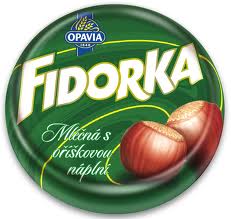
Our two-week trip was a whirlwind of beautiful buildings, fun outings and media visits. Translation: an amazing experience for a journalism nerd who loves to travel. I learned some new words — “pain” means bread in French and doesn’t sound at all like our less pleasant word of the same spelling. I ate some new food — like goulash, Fidorka (look it up on Wikipedia) and those tasty, actually Belgian, waffles. But I also got to experience firsthand how Europeans cover the news.
St. Peter's Basilica.

During our visit to the school of communications at the Pontifical University of the Holy Cross in Rome, I was intrigued by David Kerr’s take on coverage of the Vatican. Kerr, a friendly Scottish man who reports for Catholic News Agency, said that while Vatican correspondents shouldn’t just produce propaganda for the Catholic Church, other news outlets often present the Church unfair.

This is interesting to me because the Church is an entity based around a religion with which people either agree or disagree based on deeply held beliefs. The Church’s positions on any topic would be expected to come back to, “It’s what Jesus would want,” and that’s something that’s based more on faith than on reasoning. But it’s not like the Church doesn’t use reasoning, and maybe that’s something that is often overlooked. For example, the Church doesn’t continue to condemn the use of contraception because it has ignored the benefits of using it, but because it decided a long time ago that humans should not interfere with the natural process of producing children; a position that still holds no matter the perceived benefits of contraception.

It’s moral decisions like this that could make covering the Church more complicated in a modern world. Is it okay for the secular world to condemn the Church for a position it sees as harmful to the future of the world? I suppose the answer should be: as long as the Church’s position is properly explained. Kerr seems to believe that too often this does not happen, and I decided to see whether he’s right.

Wednesday, February 8, 2012

The Importance of Languages

By Sydney Berry 


If there was one theme that repeated out throughout our entire trip through Europe, it was the huge role language plays in each region, be it political, social, religious or within the media. Each city we visited has a certain representation that I took from it, and I’m going to explore the role language played in each. In Prague, it was social.  In Paris, it was the media.  In Brussels, it was political, and in Rome, religious.

Tuesday, February 7, 2012

The Czech’s Effect on McCann-Erickson Advertising

By Sarah Tillou 

Before departing on our two and a half week long endeavor across Europe, I prepared a mental note regarding which cities I was most excited for, which food I craved most, and of course which media visits I anticipated visiting. As a strategic communication major, I looked forward to the visits that would be applicable to my interest and knowledge of advertising and public relations. One of these happened to be McCann-Erickson in Prague, Czech Republic. I looked forward to seeing how advertising was done in different countries and was curious to see why these changes occurred.

Monday, February 6, 2012

One World

By Ashten Travis

Flying across the Atlantic, halfway around the world I had no idea what to expect. This was my first adventure in Europe and I was curious to see how the world exactly worked in another country. Although I experienced millions of changes and culture shocks, one thing was universal, the love for our planet.

Friday, February 3, 2012

Culture: A Small Word Makes a World of Difference

By Kaitlan Whitteberry 

Granola clinked into the porcelain bowl, piling itself into a small, staggered triangle. I splashed milk onto my cereal and took a seat for breakfast. The other 22 students on my study abroad slowly trickled into the room, a few frowning faces mirrored those still jet-lagged from our travels the day before. However, everyone seemed slightly giddy, as it was our first day in Prague! I smiled and took a bite of my granola thinking of the days ahead. But my thoughts were interrupted, and before I knew I was having a cultural experience.

Thursday, February 2, 2012

Culture: Advertising and the Same Big World

By Kristyn Mysker

When deciding whether or not I should participate in the Europe tour there were several influences, but culture was the only one that really sold me on the idea. I have been on a few cruises and each time I go I love seeing people of all different cultures coming together for one common purpose, vacation. It’s also interesting to see how even though most of the islands the ship goes to are part of the Caribbean, yet they all still maintain their own identity in some way. Having never been to Europe, I wondered if it would be the same. It was. But I also got more than I had asked for and was exposed to culture in ways that never crossed my mind.

Wednesday, February 1, 2012

Privacy Across the Globe

By Alexandria Seay


After studying American journalism for four years, it was quite easy to get wrapped up in the culture of the Missouri School of Journalism and to seemingly forget that media can be different in other parts of the world.  The Europe Tour provided thought-provoking presentations that illustrated the various ways the government plays a role in journalism and advertising overseas.  The presentation I found to be most interesting was that of Peter Gumbel, the Director of Communications for Sciences Po. He showed an intriguing multimedia presentation that highlighted differences between French and American privacy laws and their portrayal in the media.  What I once considered to be social norms were not so normal in France.  

Many of the topics covered in the lecture stemmed from the French Civil Code.  Article 9 of the French Civil Code states “everyone has the right to respect for his or her private life” and goes on to define one’s private life as including “his or her love life, friendships, family circumstances, leisure activities, political opinions, trade union or religious affiliation and state of health.”  These French privacy lawss are enforced regardless of whether a person is a public figure or private individual.  As one can gather from this section of Article 9, French privacy laws have a few substantial differences from American privacy laws.  In many cases, the French privacy laws are stricter than those of Americans.

In America, the notion of newsworthiness is a large factor for journalists.  We believe we have a responsibility to inform the people.  Therefore, with this responsibility we often see the exposing of public figures in American media.  However, based on France’s stance on this matter, it is apparent that the idea of newsworthiness prevailing is not a universal truth. Gumbel spoke of the respect for citizen’s private lives, an idea highlighted in the Civil Code.  He gave an example of a public figure running for governmental office, claiming to be a devout Catholic, but having an affair.  There was knowledge of his infidelity amongst journalists, but no one would report on it because this dealt with his private life.  After learning this information, many of the students on the tour had questions.

Tuesday, January 31, 2012

It All Depends On Lifestyle

By Bridget Kelly


My most highly anticipated media visit scheduled for the Europe Tour was McCann-Erickson in Prague, Czech Republic. My emphasis area is in strategic communications and I can only dream of working for an advertising agency like McCann-Erickson one day. I had been looking forward to this media visit since I read our Europe Tour itinerary. Excitement had been building up inside of me as I imagined everything we would learn about advertising in a different part of the world. Immediately we learned that the McCann-Erickson Prague office consists of six interconnected marketing solutions to benefit its clients, including: McCann Erickson, McCann Digital, Momentum, Universal McCann, Weber-Shandwick, McCann Buzzzer and MRM. Together these components allow McCann Worldgroup Prague to fulfill the visions of its clients through a dynamic brand strategy. However, I soon learned that this dynamic brand strategy is vastly different than what I perceived it to be.

Monday, January 30, 2012

The Language Barrier

By Kayla Meyers

Hello! Ahoj! Bonjour! Hallo! Ciao!

English, Czech, French, Dutch and Italian. These five are just a taste of the languages that we encountered on our trip to Europe. While I had visited Paris before our trip, I was unsure what to expect in the other three cities, as I had never communicated with people who speak languages other than English, Spanish and French. Personally, I can't speak any language other than English, so I relied on Google Translate to learn key phrases that would help me get by at restaurants and shops, but this barely scratched the surface. After visiting each of the four cities, I realized that each has a very distinct culture that communicates not only verbally, but non-verbally as well.

Delicious treat from Prague.
On our first day in Prague, I started to pick up on some of the Czech body language and communication styles. It seemed as if the locals in Prague were a bit cold to our loud American ways. I felt as if not many of the people that we met knew how to speak English, or at least, very little. However, at McCann-Erickson (an advertising agency), I noticed that some of the commercials we saw had English-speaking characters with Czech captions. This is something I don't commonly see in America - the advertisements are usually always English-speaking characters. The advertisements shown were also able to connect with people other than purely Czech audiences. For example, the Fidorka commercial shown influenced quite a few of us on the trip to visit the supermarket and purchase the delicious chocolate treats. On our free day in Prague, we were able to see more of the culture and experience more of the locals and how they communicate. I still felt a sense of coldness at times, especially when people realized that we were Americans and couldn't speak a bit of Czech, except for the simple "hello", "goodbye", and "thank you" that we had learned from Google Translate.

Friday, January 27, 2012

Czech the Difference

By Ilyse Cohen 


After getting back from our two-week journalism study abroad program to Prague, Paris, Brussels and Rome, I have learned so much about how different countries handle different aspects of the media. One of the differences I found most interesting was how the Czech Republic advertisements were targeted and regulated. In Prague, we visited McCann-Erickson, a worldwide advertising agency network with eight different media companies all geared toward helping their clients and growing their business.